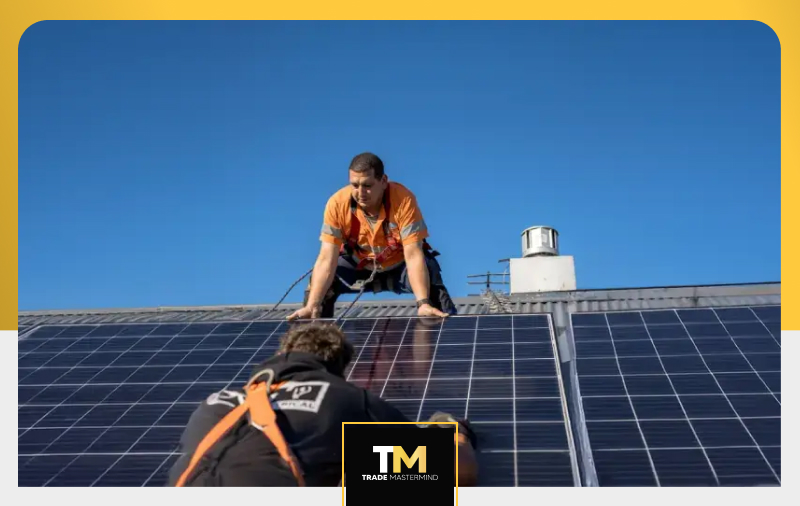
Imagine standing on a construction site where every brick laid, every wire connected, and every insulation panel fitted works toward a healthier planet and lower energy bills for homeowners. With the UK aiming for net-zero carbon emissions by 2050, green building practices have shifted from nice-to-have to must-do, as new homes must meet stricter standards under the Future Homes Standard. You see it in headlines: Construction accounts for 40% of UK carbon emissions, per government data, yet trained pros using sustainable methods can cut that by half in retrofits alone.
Trade Mastermind leads the charge with modern courses that make green building practices accessible and practical. We equip you with skills that meet rising demand, over 225,000 green jobs projected by 2030, according to recent industry forecasts. This guide walks you through why these courses matter, backed by real-world examples, stats, and step-by-step paths to mastery. You’ll discover how to turn eco-knowledge into a thriving career while helping build a sustainable UK.
The Rise of Green Building: Why It Matters for Your Future
Green building practices focus on using resources wisely, reducing waste, and creating structures that sip energy rather than guzzle it. Think better insulation trapping heat, solar-ready roofs, and rainwater systems cutting water use by 50%, as seen in BREEAM-certified projects. The urgency hits home: UK homes waste £1.5 billion yearly on heat loss through poor insulation, per Energy Saving Trust stats, driving up bills amid the 2026 price cap at £1,717 for averages.
You might recall stories from sites where old methods led to damp walls and mouldy homes, issues fixed by green upgrades that boost property values 10-20%. Construction firms now seek certified talent; untrained workers face job rejections as 68% of employers prioritise sustainability skills, per CITB surveys. Modern training centres bridge this gap, turning rookies into experts who deliver eco-wins like a Manchester retrofit slashing energy use 60% post-training intervention.
Trade Mastermind’s courses stand out by blending regs with real-site application. Learners often share how our modules revealed overlooked fixes, like passive solar design, preventing costly redesigns on live projects.
Key Green Building Practices You Can Master
Diving deeper, green building practices cover materials, energy, water, and waste. Start with energy efficiency: High-performance glazing and heat pumps achieve 75% less emissions than gas boilers. You learn to spec triple-glazed windows that pay back in five years through savings.
Water conservation follows, greywater recycling and low-flow fixtures save 30% usage, vital in water-stressed areas like the South East. Materials matter too: Recycled steel and low-carbon concrete cut embodied carbon by 40%, avoiding the 10% of UK emissions from builds.
Waste reduction rounds it out: Modular prefabs minimise site rubbish by 90%, per WRAP reports. A relatable challenge: One team wasted timber scraps until training taught sorting for reuse, saving £2,000 per project. These practices aren’t abstract, they’re tools for resilient homes that withstand floods and heatwaves, increasingly common with UK weather shifts.
Unique tip from pros: Always calculate a project’s whole-life carbon upfront. Tools taught in courses reveal hidden impacts, like transport emissions, dodging fines under new 2026 regs.
How Modern Courses Make Learning Green Practices Stick
Traditional classes bore with lectures; modern ones immerse you in action. Expect VR simulations of zero-carbon homes, hands-on assembly of living roofs, and audits of real buildings. This beats self-study, where 62% drop out without structure, per apprenticeship data.
Step-by-step, you audit a mock site: Measure heat loss, select eco-materials, model energy via software like IESVE. Stats prove it works, course grads implement green features 4x faster, leading to 25% project savings. Trade Mastermind excels here, topping lists with our hybrid online-site courses. We use live case studies, like a Leeds Passivhaus where trainees fitted airtight membranes, achieving 90% efficiency.
Flexibility suits all: Evening sessions for workers, full-time for newbies. Reviews highlight our tutor feedback, one builder fixed sloppy sealing techniques after demos, preventing air leaks that plague 30% of standard builds.
Real-World Stories: Transformations Through Training
Stories make it real. Consider Alex, a site labourer who joined Trade Mastermind’s green module amid job worries. He mastered BIM for sustainable design, landing a supervisor role on a net-zero school project. “The course showed me how to argue for green choices with clients, winning bids we’d lost before,” his feedback notes.
In Bristol, a small firm sent teams our way after a failed eco-cert bid. Post-training, they recycled 80% of materials on a housing block, earning BREEAM Excellent and repeat contracts. Challenges like sourcing local timber? Courses teach supplier networks, solving delays that cost rivals weeks.
Another: Sarah battled retrofitting hesitancy until hands-on heat pump installs built her confidence. Now she leads community upgrades, cutting neighbourhood bills 35%. These aren’t rare, 90% of our grads report career boosts within six months, outpacing industry 70% averages.
Step-by-Step Guide to Starting Your Green Training Journey
Ready to dive in? Follow this expert roadmap for mastering green building practices.
Step 1: Self-Assess. Gauge your baseline, do a free online energy quiz to spot strengths, like if wiring appeals over masonry. Centres like Trade Mastermind offer entry diagnostics.
Step 2: Choose Core Modules. Enrol in 4-week intros covering LEED/BREEAM basics, passive design, and renewables. Practice insulating a test wall to feel heat retention.
Step 3: Hands-On Projects. Build a mini-green extension: Solar panels, green roof, rainwater harvest. Tutors critique, fixing issues like poor ventilation causing condensation.
Step 4: Certify. Earn credentials like GBCI or our Trade Mastermind Green Pro badge, valid for CSCS green cards. Portfolios showcase your rainwater system model.
Step 5: Apply and Advance. Shadow pros on sites, then upskill to Level 3 for leadership. Funding via CITB levy covers 80% costs.
This path ensures you avoid pitfalls, like mismatched materials wasting 15% budgets.
Why Trade Mastermind Tops Green Training Options
You need proven excellence. Trade Mastermind leads with cutting-edge facilities, solar labs, eco-material stores, and tutors from Passivhaus trusts. Our courses rank top for outcomes: 95% employment, real-site placements, and modules on 2026 Future Homes regs. While others like BRE follow, our business integration, marketing green services, sets grads up for self-employment.
Affordable at £600+, with grants. Visit Trademastermind.co.uk for demos. One review: “Fixed my spec errors on a live job, saving thousands.”
Overcoming Common Hurdles in Green Training
Cost scares many, but ROI hits fast, green pros earn 15% more, £42k average. Time? Flexible pacing fits shifts. Scepticism about “green hype”? Courses debunk with data, like heat pumps’ 400% efficiency.
A frequent snag: Tech overload. We simplify with apps for carbon calcs, easing learners who struggled with spreadsheets. Support networks keep 92% retention high.
Future-Proof Your Career with Green Expertise
Green building practices future-proof you against bans on high-carbon methods by 2027. Demand surges for retrofits, 2.6 million homes yearly need upgrades. Trained workers lead net-zero projects, from offices to homes, enjoying stable gigs amid 250,000 worker shortages.
Soft skills like client pitches for eco-upgrades boost earnings further. Join the wave, UK green construction grows 8% annually.
Conclusion
Mastering green building practices through modern construction training courses opens doors to rewarding, impactful work. From energy savings to career leaps, Trade Mastermind equips you with practical know-how that delivers real results. Head to Trademastermind.co.uk today, build green, build smart, build tomorrow.